Dermoscopy
Detailed examination of suitable moles and lesions by a trained clinician.
Medical — Dermoscopy, Diagnosis & Minor Surgery
Dermoscopy, biopsy, histology and minor surgery for suspicious, troublesome or cosmetic skin lesions — including selected skin cancers — in our CQC-registered Newmarket clinic.
Clinician-led dermoscopy · Surgery under local anaesthetic · Histology where indicated

CQC Registered
Rated "Good" at inspection
5.0 on Google
137 patient reviews
Medical practitioners only
Doctors, nurse prescribers & dentists
Honest consultations
No obligation to proceed
The pathway — 01
01
We take a focused history and examine the lesion carefully, using dermoscopy where appropriate. This can reveal structures not visible to the naked eye and helps us decide whether reassurance, monitoring, biopsy, excision or urgent referral is the safest next step.
02
You receive a clear diagnosis or differential diagnosis, treatment options, likely scarring, aftercare and a written fee. If the lesion has features that require an NHS urgent suspected-cancer pathway or specialist multidisciplinary care, we will explain that promptly.
03
Suitable lesions can be treated with cryotherapy, electrocautery, curettage, shave excision, punch biopsy or full excision under local anaesthetic. Tissue is sent for histology where indicated, and follow-up covers results, wound review and stitch removal.
Dermoscopy & diagnosis — 02
A dermatoscope combines magnification and specialised light to show colours and structures beneath the skin surface. NICE recommends dermoscopy during specialist assessment of suspected melanoma because, in trained hands, it improves the distinction between benign and malignant lesions and can reduce unnecessary surgery.
Dermoscopy supports clinical judgement; it does not replace histology. When tissue is removed, laboratory examination provides the definitive diagnosis and helps confirm whether the lesion has been completely excised.
Detailed examination of suitable moles and lesions by a trained clinician.
A clear plan for reassurance, monitoring, biopsy, excision or urgent referral.
Selected BCCs and some SCCs may be excised here when clinically appropriate.
Removed tissue is analysed where indicated, with results and follow-up explained.
Skin cancer care — 03
Early non-melanoma skin cancers are commonly treated surgically. Following clinical assessment and dermoscopy, selected basal cell carcinomas and some squamous cell carcinomas may be suitable for excision under local anaesthetic at our clinic, followed by histology and a planned review.
Not every suspicious lesion belongs in a routine private minor-surgery pathway. A lesion that may be melanoma, is clinically complex, or needs multidisciplinary management will be directed to the appropriate urgent specialist service. Our priority is the safest pathway, not surgery for surgery's sake.
Cosmetic lesions
The NHS does not usually fund removal of a harmless lesion when treatment is requested only to improve appearance. We can privately assess and, where appropriate, remove benign moles, skin tags, seborrhoeic keratoses, cysts, lipomas and other suitable lesions. We will explain the likely scar, alternatives and risks before you decide. Suspicious lesions are always managed as a medical diagnostic concern, not as cosmetic treatment.
US airbase & overseas cover
Patients and families connected with RAF Lakenheath, RAF Mildenhall and other US installations may be able to seek reimbursement through TRICARE Overseas or another private health plan for eligible, medically necessary care. Policies vary and reimbursement is never guaranteed. Confirm referral and pre-authorisation requirements before booking; you may need to pay the clinic first and submit a claim afterwards.
Our team can provide an itemised invoice, clinical documentation and proof of payment to support an eligible claim. For Aviva and WPA information, visit our health insurance page.
Transparent fees — 04
| Initial Consultation (Clinical Nurse Specialist) | £150 |
| Skin Cancer Check (GP wSI Dermatology) | £180 |
| Cryotherapy (up to 3 lesions)Additional lesions +£10 each | £170 |
| Electrocautery (up to 3 lesions)Additional lesions +£10 each | £290 |
| Shave excisionHistology & follow-up included | £520 |
| Punch biopsy (inc. histology) | £580 |
| Elliptical excisionHistology & follow-up included | £740–£800 |
| Lipoma excisionHistology & follow-up included | £1,150–£1,220 |
| Malignant lesion excisionBCC and some SCC — histology & follow-up included | £1,150–£1,220 |
Histology and follow-up are included with all excision appointments. A consultation is mandatory before any procedure. Prices are a guide and may be adjusted according to complexity.
Referrals
GP and dermatologist referrals are welcome at info@medhub.org.uk — or self-refer for a diagnostic consultation via MedHub.
I am really happy that I now have a diagnosis and am not putting the wrong creams on my face. It was money well spent.
Having surgery elsewhere?
We can consider blood tests, ECGs, GP assessments, wound checks, dressings and suture removal for surgery at a private hospital in the UK or abroad. A surgeon's letter and clinical review are required; the operating surgeon must retain responsibility for surgical complications and further intervention.
Explore pre- and post-operative care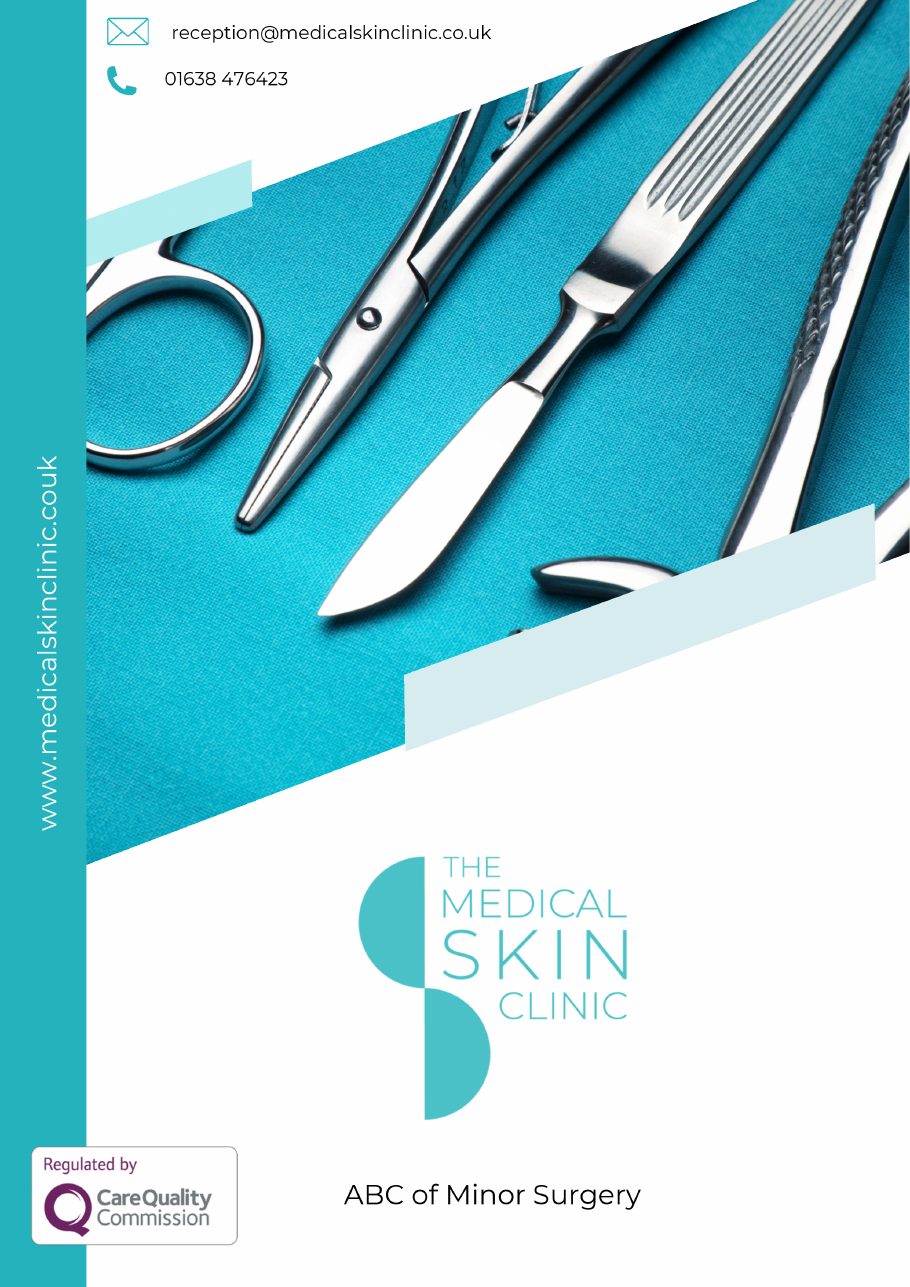
Free clinician-written guide
Complete the short form to unlock our 19-page guide to mole, cyst, lipoma and skin tag removal — including procedures, histology and what to expect at every step.
Your details are submitted securely through GoHighLevel. Please see our privacy policy.
FAQ
Can't find your answer? Call us on 01638 476423 — our team will be glad to help.
Clinical information sources: NICE guidance on dermoscopy and suspected skin cancer, NHS guidance on non-melanoma skin cancer treatment, and Royal Marsden guidance on skin-cancer diagnosis. Page last reviewed 5 September 2026.
Learn more in the Education Station